Landed Cost Explained: The True Cost of a Unit Ready to Sell
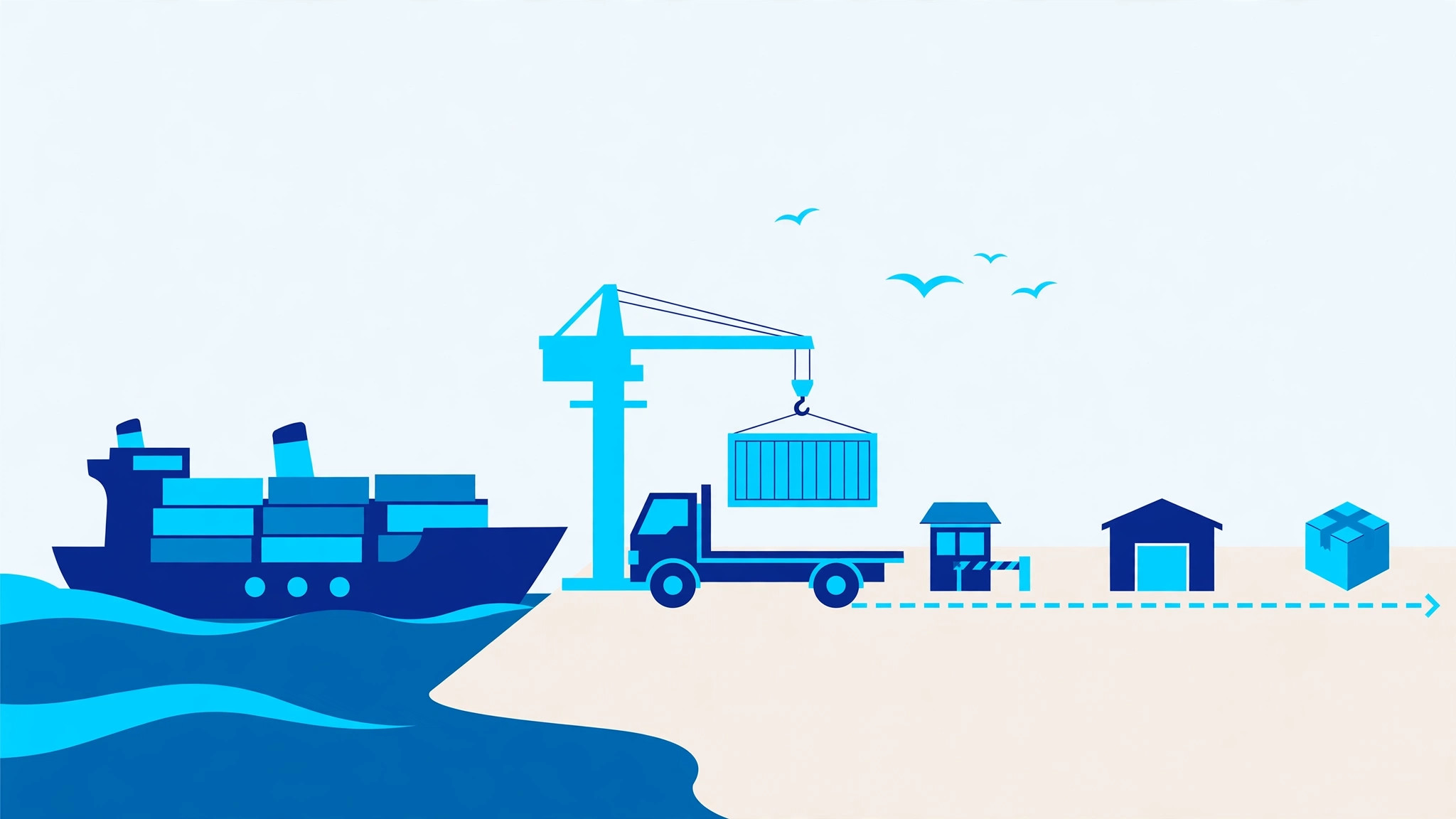
What belongs in a landed cost
The invoice price of a product is the beginning of its cost, not the end. Between the supplier's shelf and a saleable unit sit international or domestic freight, customs duty and taxes on import, insurance, port and handling charges, delivery to your storage, packaging, labels and any preparation your channel requires. Landed cost is the sum of all of it, divided by the units it bought. A product invoiced at $6 that arrives with $1.80 of freight and duty, $0.40 of packaging and prep and $0.30 of inbound delivery is a $8.50 product, whatever the invoice says. Sellers who price from the invoice figure donate the difference to their customers on every order, and usually discover it at the end of the quarter rather than the end of the day.
How to calculate it without an accounting department
The method is simple bookkeeping per shipment. Take one shipment and add every cost attached to it: goods, freight, duty, clearance, local delivery. Divide by the units received and you have the landed cost for that batch. Keep batches separate when costs move, because averaging a cheap early shipment with an expensive later one hides the trend you need to see. Include the unglamorous lines: the sample fees you amortize, the inspection cost, the occasional damaged unit written off across the good ones. Per-unit inbound shipping to a fulfillment centre belongs here too, since it is a cost of having a unit ready to sell. Spreadsheet or notebook, the tool matters less than the habit of never letting a cost float unassigned.
Landed cost is the floor under every other calculation
Every other number in this site's toolkit stands on landed cost. Margin is fiction if the cost is understated. Break-even volume is too low. The price for a target margin is too low. Advertising looks profitable when it is not, because the cost per acquisition is compared against a margin that never existed. This is why experienced sellers are almost boring about costing: they know the error compounds through every later decision. Rebuild the landed cost whenever a supplier, freight rate or exchange rate changes, and rebuild it per product rather than using one blended figure across a catalogue. Ten minutes of costing protects every price you set afterwards. Keep the landed cost per product on the same sheet as its selling prices per channel. When the two live together, a freight increase immediately shows which prices it has broken, instead of waiting for the quarterly accounts to reveal that a bestseller has been subsidising its customers since spring.