Customer Lifetime Value Explained: Revenue Is Not the Figure to Spend Against
Building LTV from three facts
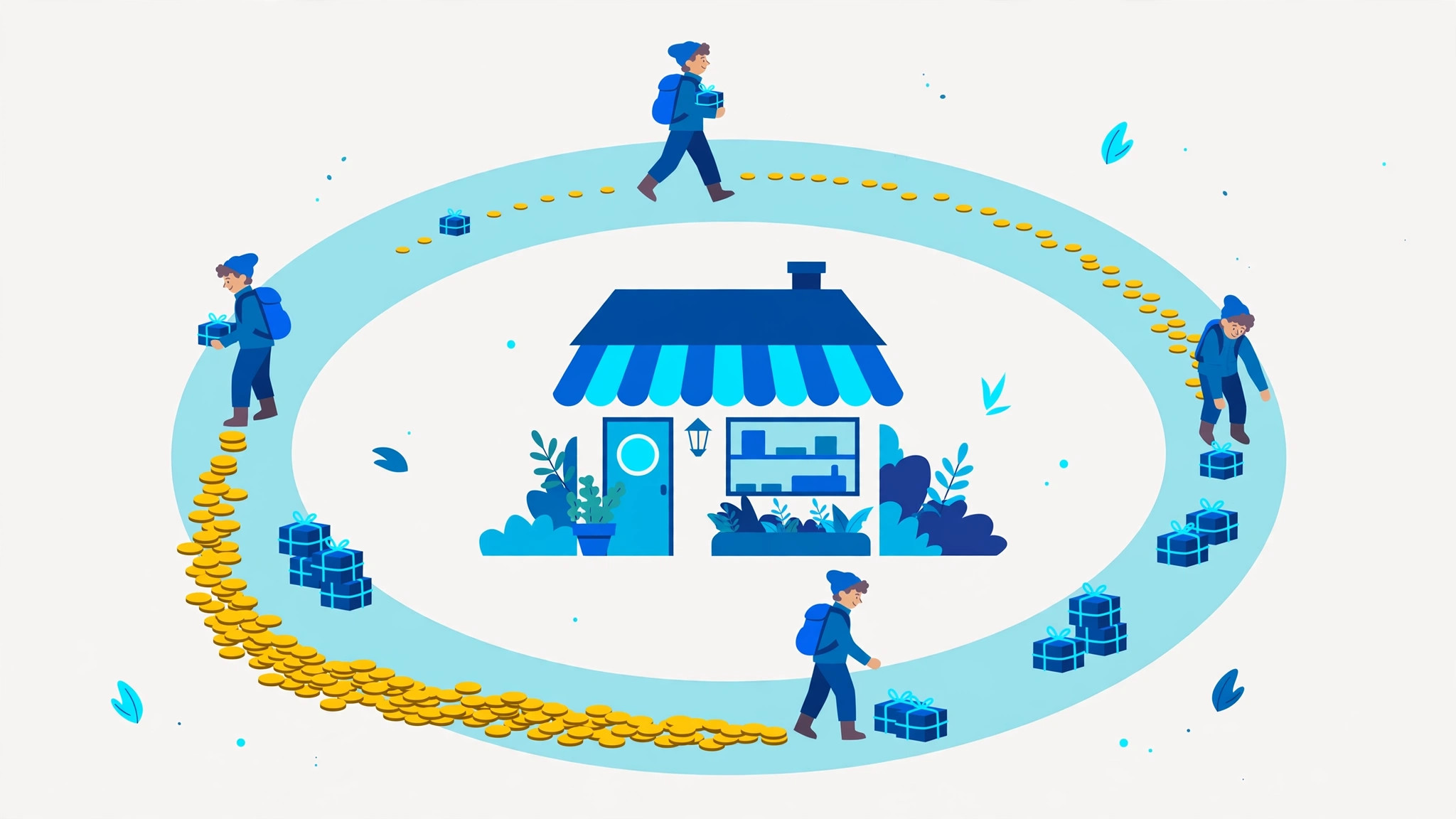
Lifetime value rests on three facts about your customers: how much a typical order is worth, how often they order, and how long they keep ordering. Multiply average order value by orders per year by years as a customer and you have lifetime revenue: a $60 basket, three orders a year, for two years, gives $360. That revenue figure is the one most tools display, and it is the wrong one to spend against, because it ignores what the goods cost. Apply your gross margin and the same customer is worth $144 of gross profit at a 40 percent margin. The LTV calculator on this site shows both, deliberately, because the gap between them is where over-optimistic marketing budgets are born.
Estimating the inputs honestly
Each input has a trap. Average order value should come from the customers you are valuing, not the whole store, if channels differ. Frequency should count completed, kept orders, not orders later refunded. Lifespan is the hardest: few stores have years of clean cohort data, so use the observed repeat behaviour you have, be conservative, and revisit the estimate as data accumulates. A useful discipline is to calculate LTV at a deliberately cautious lifespan, say the period over which you have actually watched customers repeat, and treat anything beyond it as upside. An LTV you trust at $144 is worth more than a hopeful $300, because the spending decisions it drives will be right-sized.
What LTV is for
LTV exists to be compared: against CAC, to judge whether growth pays; against the first order's profit, to judge whether you can afford to break even or lose a little on the first sale to win the relationship; and across channels and products, to see which customers are worth most. It also disciplines retention work: raising frequency from three orders a year to four lifts LTV by a third, often more cheaply than buying a third more new customers. Recalculate it a few times a year, by channel if you can. A rising LTV with a stable CAC is a business getting stronger. A falling LTV is an early warning that the customer base is changing for the worse. Segment the estimate when your customers visibly differ: subscribers against one-off buyers, business against consumer, domestic against international. A single blended LTV can justify spending that only the best segment repays. Even two segments are a large improvement on one, and the segments usually choose themselves once you look at the repeat data.
Run your own numbers
The free calculator that goes with this guide:
Calculate lifetime value after margin